

Helping You Achieve Peace Of Mind
Understanding Lady Bird Deeds
A Lady Bird Deed, also known as an enhanced life estate deed, is a real estate document that specifies who will inherit property when the current owner dies. The individual who creates the Deed retains full ownership and control of their property during their lifetime, including having the right to sell it. They can also change or revoke the Lady Bird Deed at any time.
When families start exploring strategies to ensure their elderly parents or grandparents can access Medicaid services for long-term care, Lady Bird Deeds are frequently considered. Rather than eliminating assets, such as the family home, to ensure eligibility and risk being penalized by the State of Texas, Medicaid recipients can use the Lady Bird Deed to grant their residential property to their heirs.
While they’re alive, they are entitled to live in their home until their death or until their medical needs necessitate a move into a long-term care facility. Upon their passing, the home automatically transfers to the named beneficiaries, bypassing probate and preventing the State of Texas from taking it through the Medicaid Estate Recovery Program (MERP).
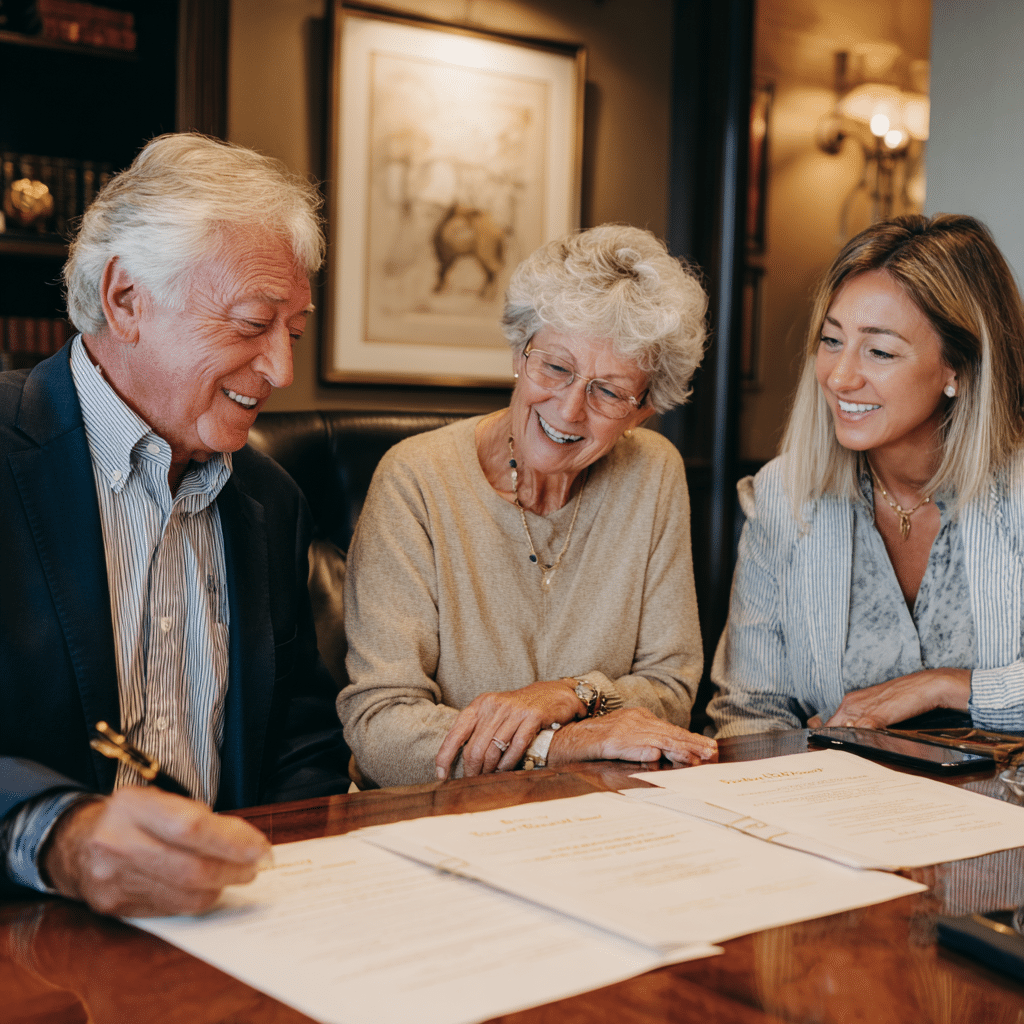
Lady Bird Deed vs. Traditional Life Estate Deed
Both a Lady Bird Deed and a traditional Life Estate Deed allow real estate to automatically pass to heirs without being caught up in the probate process. However, they differ in the extent of the original owner’s power over that property.
Through a Lady Bird Deed, you retain full ownership rights while you’re alive, enabling you to sell, mortgage, or rent your property, or even cancel or change the beneficiary. In a traditional Life Estate Deed, you can live in and use the property for life, but can’t sell, refinance, or change the designated heir without consent.
LEARN MORE
Frequently Asked Questions About Lady Bird Deeds
Does a Lady Bird Deed avoid probate?
Yes. A Lady Bird Deed entirely avoids probate for real estate upon death. The property transfers directly to your named beneficiaries, preventing the need for a court process.
Does a Lady Bird Deed override a will?
Yes. A well-executed Lady Bird Deed overrides a will for the specific real estate property it covers. The property transfer happens outside of probate, so instructions in a will can’t change or redirect that property. This means that if one person is named in a will to receive a house, but a Lady Bird Deed names someone else, the person named in the Lady Bird Deed receives the house.
Can a Lady Bird Deed be revoked or changed?
Yes. While the property owner is alive, they can revoke or change the Lady Bird Deed at any time. This can provide them with much-needed peace of mind.
Can a Lady Bird Deed protect my home from Medicaid Estate Recovery?
Yes, it can. In Texas, a house with a named beneficiary in a Lady Bird Deed will pass directly to the beneficiary without going through probate. This prevents the State of Texas from taking ownership of it through its estate recovery program.
Helping You Every Step of the Way
How Livens & Reed Can Help
If a Lady Bird Deed sounds right for your elderly or infirm loved one, Livens & Reed, PLLC is ready to help. For more than 25 years, families throughout North Texas have been turning to us for Medicaid planning and asset preservation strategies.
With two offices to better serve them, our attorneys and staff provide comprehensive estate preservation, asset protection, and Medicaid planning services for clients in the Dallas-Fort Worth Metroplex and communities throughout North Texas.
Call us toll-free at 817-545-3425 to discuss your circumstances. You may also use our convenient contact email form to arrange a free initial consultation at one of our two convenient office locations in Bedford and Addison.
We have earned a reputation for integrity, backed by exceptional client service and responsive communication. You will find our fee structure competitive and our billing policies clear and fair.
Se Habla Español.
what we offer
Our Medicaid Planning & Elder Law Services


Reviews
Hear From Our Past Clients
Don’t just take our word, see what the people we’ve helped have to say.

Posted on Google 
Randy Grosenbach
 Trustindex verifies that the original source of the review is Google.
Very helpful knowledgeable concering someone going into a Nursing home needing medicaid approval. They came highly recommended and now so will we highly recommend them.
Posted on Google
Rick Lewellyn
Trustindex verifies that the original source of the review is Google. We engaged Livens & Reed to create a Supplemental Needs Trust for our adult special needs daughter, to ensure her financial needs were met but also done in a way to not disqualify her for Texas Medicaid benefits she currently receives. Shawn Crawford was excellent, along with Caleigh and Angie: very thorough, explaining every aspect and legalese in layman's terms, in a timely manner and what we thought was a very reasonable fee. We also consulted with Chad Reed on our aging parent's needs and what steps we might follow to have them qualify for Medicaid, when the time and need arises. Very friendly, spent all the time we needed with us during our free consultation. Highly recommend this law firm for anyone considering Trusts, Medicaid qualifications, and elder care. Thank you Livens & Reed!
Posted on Google
The Killian Group
Trustindex verifies that the original source of the review is Google. Fantastic law firm for all your needs. They helped my family set up our estate and will. Thank you so much.
Posted on Google
Rick Sullivan
Trustindex verifies that the original source of the review is Google. Nicole did a fantastic job walking me through the Medicaid process for my mom. She answered all my questions with kindness & respect keeping all parties in mind that were involved with the process.
Posted on Google
Kelly Fincher
Trustindex verifies that the original source of the review is Google. Wished we called sooner! Recommend highly!!
Posted on Google
Nancy King
Trustindex verifies that the original source of the review is Google. The legal team at Livens & Reed has proved to be nothing short of exceptional. From Chad Reed, Nicole Landrum and finally, today, Shawn Crawford. Talking about a dream team, I feel very fortunate and comforted knowing I have the right people on my side. Thank you for your warmth and professionalism! It’s reassuring to know our legal needs are in great hands. If I could rate higher than 5 stars I absolutely would.
Posted on Google
Julie Robinson
Trustindex verifies that the original source of the review is Google. We were very satisfied. We were well take care of. They are very professional and did a great job for us.
Posted on Google
Erika Koneck
Trustindex verifies that the original source of the review is Google. I worked with Livens & Reed on a medicaid situation for my 93 year old mom. The paperwork, rules, timeline, can be stressful and intimidating at times, but Mehan Barbre & Nicole L. Harkins walked me through the paperwork, and doctuments that we needed and told me what to do and in the end sucess ! Thank you , again ! Erika Koneck